
Why Early SuDS Integration is Key to Sustainable Development in the UK
Discover how integrating sustainable drainage systems from day one reduces redesign risk, strengthens your approvals pathway and delivers better outcomes for developments across the UK.
Why Early SuDS Integration is Key to Sustainable Development in the UK provides clear, practical guidance for developers, planners, designers, local authorities and asset owners. Covering everything from site selection and concept design through to approvals, procurement and long-term handover, this Egniol guide turns complex policy requirements into a manageable, stage-by-stage framework.
Whether you are at the start of a new scheme or reviewing a drainage strategy that has already been fixed into a layout, this guide sets out what good looks like and where the risks tend to emerge.
Download the guide and speak with us if you would like tailored support.
Download the guide and speak with us if you’d like tailored support.
What This Guide Covers
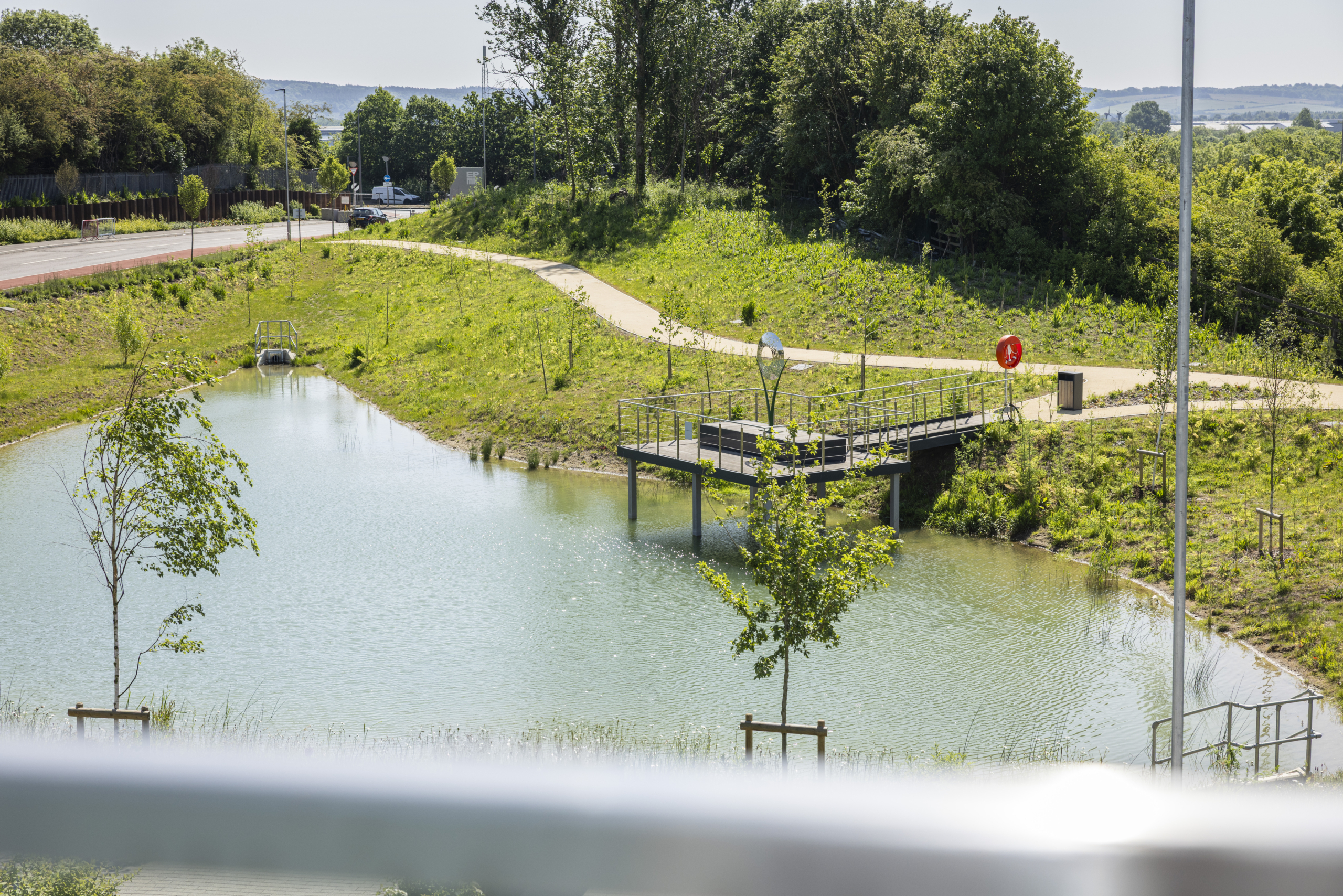
Across the UK, planning and environmental policy now expects developments to manage surface water at source, reduce flood risk, protect water quality, contribute to biodiversity and enhance the places people live and work in. The direction of travel is clear and the expectations are only tightening.
In Wales, SuDS Approval Body (SAB) sign-off has been mandatory for applicable schemes since January 2019. In England, updates to the National Planning Policy Framework and the introduction of mandatory Biodiversity Net Gain have raised the bar further, with national standards for SuDS published in 2025. Scotland and Northern Ireland maintain strong expectations through planning policy and water legislation. Across all four nations, the CIRIA SuDS Manual (C753) remains the core technical reference.
SuDS are most effective, and most economical, when they are considered as part of the masterplan from day one. When they are retrofitted late in the design process, the costs show up in hard rework, iterative redesign and, ultimately, in the performance of the finished development.
This guide brings together Egniol’s civil engineering expertise to give you a practical, stage-by-stage framework for getting this right.
What You’ll Learn from This Guide
- Why early SuDS integration reduces redesign risk and strengthens planning approvals
- How to understand your site and define a clear drainage strategy at feasibility stage
- Design principles that deliver water quality, biodiversity net gain and place quality together
- The approvals, adoption and procurement steps for both Wales (SAB) and England (LLFA/NPPF)
- Common pitfalls and the fixes that experienced teams apply
- The evidence and metrics that regulators and approvers expect to see
Why Timing Matters
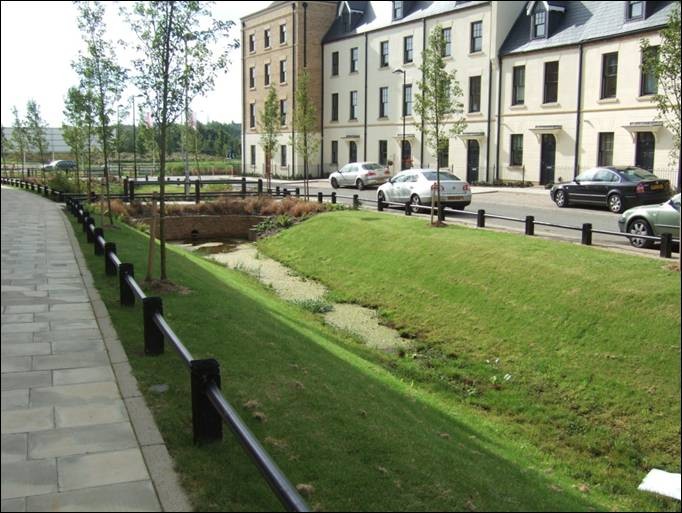
Designing a site with surface water infiltration, conveyance and storage in mind from day one allows the design team to place the right land uses in the right places, minimise hard rework when drainage is retrofitted, and unlock co-benefits including playable landscapes, habitat corridors and better site character, often at lower cost than conventional grey infrastructure.
In Wales, late-stage SuDS can trigger SAB revisions, redesign and delay. Planning for SuDS in concept and at pre-application stage streamlines the SAB determination process. In England, the updated NPPF reinforces sustainable drainage within infrastructure design, with a clear expectation that SuDS manage surface water runoff close to where it falls and account for the predicted impacts of climate change. Again, this is best achieved when integrated early.
The Five Common Pitfalls
Even experienced teams fall into the same traps when drainage is treated as an afterthought. The guide covers five of the most common, including designing pipes first and SuDS later, under-estimating maintenance requirements, treating SuDS as a purely engineering exercise rather than a place-making opportunity, inadequate early dialogue with SAB or the LLFA, and relying on a single point of treatment rather than applying the CIRIA treatment train approach.
Each pitfall comes with a practical fix..
From Concept to Handover: A Stage-by-Stage Framework
The guide is structured around the full project lifecycle, from RIBA Stages 0 to 2 through to construction and handover, with checklists, “Ask your team” prompts and “Act now” actions at each stage. It covers the early-stage essentials, outline design principles, approvals and procurement, delivery and commissioning, and the evidence pack you need to convince approvers.
A mini checklist at the back of the guide summarises the key actions at every stage, from soils and infiltration testing at concept through to as-builts and the 12-month aftercare schedule at handover.

Real-World Experience
“The most resilient projects are the ones that treat SuDS as core infrastructure from day one. When drainage, landscape and layout are designed together, approvals are smoother and the place performs better, on day one and in year twenty. Early SuDS doesn’t just manage water, it unlocks value.”
Dan Shoesmith, Civil Engineering Services Director, Egniol
Download the Full Guide
For the complete framework, including checklists, design principles, policy guidance and the at-a-glance Ask/Act index, download the full guide below.
Download the guide and speak with us if you’d like tailored support.
Speak to Egniol
Ready to strengthen your project’s design and compliance approach?
Whether you are reviewing a concept, preparing a SAB or LLFA submission, or looking to strengthen your SuDS strategy before designs are fixed, Egniol can provide a focused risk and opportunity note within a week.
Get in touch for a no-obligation review of your drainage concept.
Download the Full Guide
Download the guide and speak with us if you’d like tailored support.
FAQs
The requirements differ by nation, but expectations have tightened across the board. In Wales, SuDS Approval Body (SAB) sign-off has been mandatory since January 2019 for new developments of more than a single dwelling or a construction area of more than 100m². In England, the updated National Planning Policy Framework clarifies that SuDS should manage surface water runoff close to where it falls and account for the predicted impacts of climate change. Mandatory Biodiversity Net Gain, which applies to most planning applications from February 2024, has also raised expectations around how drainage features are sited and designed. The government published national standards for SuDS in July 2025, and policy is continuing to evolve. Across all four nations, the CIRIA SuDS Manual (C753) remains the primary technical reference.
SuDS are most effective, and most economical, when they are built into the masterplan from the start rather than retrofitted once a layout is fixed. Introducing drainage thinking at concept stage allows the design team to reserve permeable soils for infiltration features, keep sensitive plots away from exceedance routes, and avoid the hard rework, including kerb lines, gradients and utility corridors, that occurs when drainage is added late. In Wales, late-stage SuDS can trigger SAB revisions and delay. In England, the NPPF’s emphasis on source control means that drainage needs to be considered where runoff originates, not just at the point of discharge, and that is best achieved when integrated early.
Yes, and this is one of the most important points the guide makes. When SuDS is designed in from the start rather than bolted on at the end, it has the potential to deliver meaningful co-benefits alongside its drainage function. Blue-green corridors, bioretention rain gardens, tree pit storage and wetlands can all contribute to Biodiversity Net Gain habitat units if designed with appropriate distinctiveness and condition. They can also provide amenity space, micro-climate cooling, habitat corridors and improved site character, often at lower cost than conventional grey infrastructure. The CIRIA treatment train approach, which manages water progressively through source, site and regional features, provides the framework for realising these benefits in practice.
The guide identifies five recurring pitfalls. The first is designing pipe infrastructure first and treating SuDS as an afterthought; the fix is to start with the blue-green network and let roads and utilities adapt around it. The second is under-estimating maintenance, which leads to features failing over time; this is addressed by including realistic mowing, clearing and access regimes in the operation and maintenance plan from the outset. The third is treating SuDS as a purely engineering exercise rather than a design opportunity; co-designing with architects, landscape architects and ecologists from the start ensures drainage features contribute to place quality and BNG. The fourth is insufficient early dialogue with the SAB or Local Lead Flood Authority, which results in iterative redesign later; a pre-application conversation to agree principles early avoids this. The fifth is relying on a single point of treatment, typically a basin at the end of the system, rather than applying the treatment train and managing water quality at source and along the route.
