
Forty years after Loscoe, it is time to think again about landfill
Egniol Opinion Piece – July 2026
By Michelle Moran, Associate Director and Environmental Scientist, Egniol
On 24 March 1986, a bungalow on Clarke Avenue in Loscoe, Derbyshire was destroyed by landfill gas.
The site next door was a former opencast coal mine. Unlined, filled with household waste. A deep drop in atmospheric pressure, around 40 millibars, pushed landfill gas sideways through bands of sandstone and into the void beneath the floorboards. The pilot light on the boiler did the rest.
That was forty years ago this March. It happened before I started in the industry and it has shaped every year of my career since. Waste Management Paper 26 was published that same year. Almost everything we understand about how landfill gas behaves in the ground can be traced back to that morning in Derbyshire, at somebody’s house.
I have spent more than thirty years on gas fields, leachate systems and permit surrender. It has been a good career, and I would recommend it to anyone. Which is why I want to add something to a conversation our sector has only just started.
Vicki Hughes at CIWM is right

In June 2026, Vicki Hughes was inaugurated as President of CIWM and launched Think Again, a twelve-month campaign about how the resources and waste sector is seen. She says it is about changing the perception that we are “all about rubbish and bin lorries”. On recruitment, she says “we need talent from almost every professional background”. The sector needs to find another 68,000 people by 2036. (Read more)
She is right on all three counts. And if anyone is looking for the corner of our industry with the worst visibility problem, I can save you some time.
What we are not looking at
In January 2026, Parliament’s science office published POSTnote 759 on the management of legacy landfill. It deserved more attention than it got. (Read more)
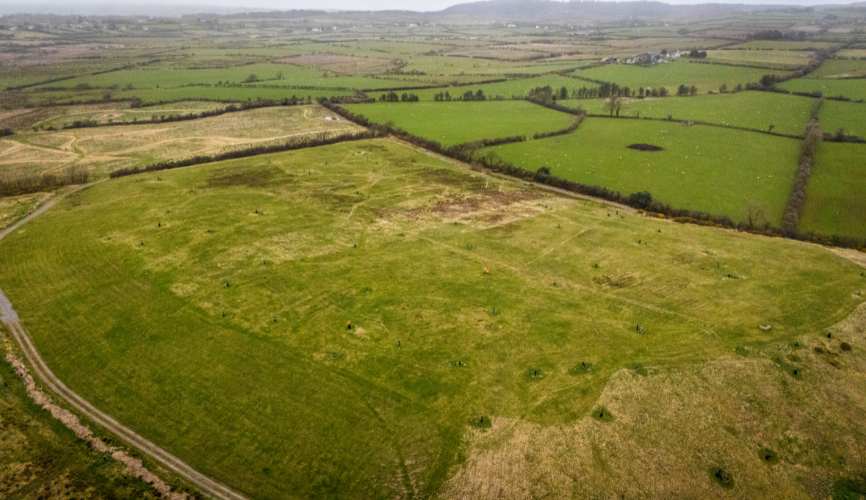
There are around 21,000 historical landfill sites across England and Wales. Roughly 80% of people in Great Britain live within two kilometres of a known landfill. The most deprived parts of the country contain around five times as many old landfills, as a proportion of their area, as everywhere else. The national contaminated land fund was withdrawn in 2017, and many local authorities now say plainly that they cannot resource the sites they hold.
Only about 1,841 of the UK’s landfills are permitted. In England, close to 20,000 sit outside the permitting regime altogether, and roughly 13,400 of those have no known owner. Not a disputed owner. No known owner at all.
Meanwhile the ground is moving. Coastal erosion and flooding open new pathways between waste and water. Drought damages the integrity of caps. Climate change multiplies both. Ammonium and some persistent chemicals are still being released from sites that closed decades ago.
None of this is a scandal. It is simply work that nobody has been asked to do.
Landfill is not a hole full of rubbish
Here is what I wish more people understood.
A closed landfill is a live system. It generates gas for decades. It produces leachate for longer. It responds to rainfall, to barometric pressure, and to what was tipped into it in 1974 as much as what went in during 1994.
Reading one properly is detective work. Gas field balancing is as much an art form as a science, and you cannot do it from a spreadsheet. You need flow data and barometric pressure alongside the compositional readings. You need to take readings when the engine or flare is running and again when it goes off, because the difference between the two usually tells you what is really going on.
At Penhesgyn on Anglesey, a site Egniol has supported for more than twenty years, the basal drawings simply do not exist. We have had to work out how the site was built by studying how it behaves. Once we understood that, we could rationalise the monitoring rather than pile more on top of it. Fewer boreholes, less testing, lower cost for the Council, and a credible path towards permit surrender agreed with Natural Resources Wales. The fen and wetland next door stayed protected throughout.
That is the job. Engineering, hydrogeology, chemistry, data and negotiation, on sites that will outlast everyone reading this. It is not bin lorries.
The part that keeps me awake
Those of us who came up in the late 1980s and 1990s are heading for retirement. There is no succession planning, because landfill has never been the fashionable end of this industry. The regulators are in the same position, with fewer experienced landfill people than we have.
When we go, the knowledge goes with us. After that you are interpreting sites built before anyone wrote much down, using data alone.
So here are four things I would ask for.
- Develop a single framework for assessing regulated, unregulated and closed landfills, combining the best of landfill gas management and contaminated land risk assessment.
- Build tools and models that can cope with data uncertainty and with residual waste profiles that did not exist ten years ago.
- Fund targeted site investigations, using standardised methods, so that risk can be compared meaningfully between regions.
- Train the next generation of consultants, engineers and regulators to understand how landfill sites really work, while there are still people around who can teach them.
Landfill is not dead
We are not heading into a world with less waste. Global municipal waste is expected to rise by around 70% by 2050. Landfill tax now stands at £130.75 per tonne, which makes landfill the most expensive disposal route for most businesses and tells you a good deal about why waste crime is growing.
Yet some material has nowhere else to go. Not everything can be recycled, particularly as recyclate streams get more contaminated. Not everything should be burned. Engineered landfill is not the answer, but it is part of the answer, and it always has been. It is also the contingency the rest of the system quietly relies on when markets turn.
Myself and our wider team at Egniol, are fully behind Vicki Hughes and the Think Again campaign. If we want people to see this sector clearly, we have to be willing to show them all of it, including the parts we have spent forty years apologising for. Think Again asks us to change how our sector talks about itself. I would gently suggest we start with the part we talk about least.
Landfill is not dead. But the people who understand it are retiring, and we are not replacing them.
Speak to Egniol
If you look after a closed landfill and are not sure where you stand, I am always happy to have a conversation. No obligation and no sales pitch. I have also written a practical guide to NRW-aligned monitoring, cost control and closure, which is free to download from the Egniol website. (Read the Guide)
Michelle Moran has spent more than thirty years in landfill, starting as a monitoring technician for Glasgow City Council and going on to design and build landfill gas extraction systems and run leachate and gas divisions. She now leads closure and permit surrender projects at Egniol. Her aim is to see the UK’s legacy landfills understood, assessed and proven neutral in their environmental impact.
If you’d like to get in touch with Michelle you can reach her at [email protected]
You can also download a pdf version of this article here.
FAQs
There are around 21,000 historical landfill sites across England and Wales. Of these, close to 20,000 in England sit outside the permitting regime, and roughly 13,400 have no known owner.
Yes. A closed landfill is a live system — it continues to generate gas and leachate for decades after it stops accepting waste. Coastal erosion, flooding and drought can open new pathways between old waste and water supplies, while some chemicals and ammonium are still being released from sites that closed many years ago.
It is a combination of engineering, hydrogeology, chemistry, data analysis and regulatory negotiation. Reading a gas field properly requires flow data, barometric pressure readings and compositional analysis taken under different operating conditions. No two sites behave the same way, and many older sites have little or no original build documentation to work from.
The generation of consultants and regulators who built their careers in the late 1980s and 1990s are now approaching retirement, and landfill has never attracted the same pipeline of new entrants as more visible parts of the sector. When that knowledge leaves the industry, interpreting complex legacy sites becomes significantly harder.
